The Short Version
Trap shooting is a clay target shooting sport. A machine called a trap, set into a low bunker in the ground, launches clay targets away from the shooter at varying angles. You stand behind it, call "pull," the bird flies, and you have about one second to break it with a single shot from your shotgun.
That's it. One shooter, one target, one shot.
The simplicity is what makes it beautiful. The depth is what makes it addictive.
What You're Actually Shooting At
The targets, called "birds" or "clays" by everyone who shoots them, are orange biodegradable discs about 4¼ inches in diameter. They're built to break on impact and designed to be visible against the sky. No actual birds are involved. The name "trap" comes from the original version of the sport, which used live pigeons released from a box. That was a long time ago. Today it's clay, and the only thing getting hurt is your pride when you miss one.
The clay target itself is a deceptively small thing when it's 40 yards out and moving. First-time shooters are often surprised, they expected something bigger. But breaking a target clean, turning it into a satisfying puff of orange dust, never gets old. Not after your first round. Not after your thousandth.
How a Round Works
A standard round of trap is 25 targets. Five shooters share the field and rotate through five stations, posts arranged in a gentle arc behind the trap house. Each shooter fires at five targets per station, then rotates. By the time everyone has shot all five stations, that's 25 shots each.
The trap machine oscillates left and right, so you never know exactly which angle you'll get. That unpredictability is the whole game. If the targets flew the same direction every time, anyone could do it. The random angle, combined with the fact that you only get one shot, is what separates trap from pointing a gun at a stationary target and pulling the trigger.
A perfect round is 25 out of 25. It's called a "straight." Even experienced shooters chase straights. When you shoot one in competition, people notice.
What You Need to Get Started
Less than you think.
- A shotgun. Most beginners start with a 12-gauge, either an over/under (two barrels stacked vertically) or a semi-automatic. Many ranges have loaner guns available. You do not need an expensive shotgun to start. You need a functional one.
- Ammunition. Standard target loads, 2¾-inch shells, 1⅛ oz. of #7½ or #8 shot. They're inexpensive, sold everywhere, and exactly what you need. Don't overthink it.
- Eye protection. Shooting glasses are non-negotiable. They protect your eyes from debris and, bonus, many shooters use tinted lenses to make the orange target pop against the sky.
- Ear protection. Foam plugs, earmuffs, or both. Shotguns are loud. Your hearing is not replaceable.
That's the whole list. Walk into most gun clubs with those four things and you can shoot a round of trap today.
Where You Can Shoot
Trap fields are at gun clubs, sporting goods ranges, county fairgrounds, and dedicated shooting parks across the country. In Nevada, the Nevada State Trapshooters Association represents hundreds of active members and clubs throughout the state. Chances are there's a trap field closer to you than you'd expect.
Most gun clubs run open trap several days a week. Many offer beginner-friendly sessions where someone will walk you through gun safety and technique before you ever step on the line. Show up, introduce yourself, and ask. The trap shooting community has a reputation for being genuinely welcoming to new shooters, because most of the people there remember exactly what it felt like to stand on that line for the first time.
Who Shoots Trap?
Here's what surprises most newcomers: everybody.
Trap shooting has one of the widest demographic ranges of any sport. Ten-year-olds competing through 4-H and high school shooting teams. Retirees who've shot for 50 years and still show up every week. Farmers, doctors, veterans, competitive athletes, people who'd never touched a gun before someone handed them one at a club event. The sport doesn't care about your age, your athletic background, or your physical strength. What it rewards is focus, consistency, and the willingness to keep working at it.
That's a rare thing in sports. It's one of the reasons people who find trap shooting tend to stay in it for life.
Is It Competitive?
Deeply, if you want it to be. The Amateur Trapshooting Association (ATA) governs competitive trap shooting in North America, with over 80,000 registered members. State associations like the Nevada State Trapshooters Association run registered competitions throughout the year. The ATA Grand American, held annually in Sparta, Illinois, is the largest shooting sports event in the world.
But competition isn't required. Millions of people shoot trap recreationally, every week, for no reason other than they love it. You can compete at the state championship level or you can show up Saturday morning with your friends and shoot a few rounds and go home happy. The sport accommodates both.
Most people who start recreationally end up curious about competition. That's just what happens. The first time you shoot a registered score and realize your result is on the books (that it matters, officially), something changes.
The Best Way to Start
Find a local gun club. Show up. Tell someone it's your first time. They'll take it from there.
Wear comfortable clothes and closed-toe shoes. Bring your eye and ear protection. If you don't have a gun, ask about loaner options. Pay for a round of 25. Step on the line, feel the weight of the gun against your shoulder, look out at the trap house, and call "pull."
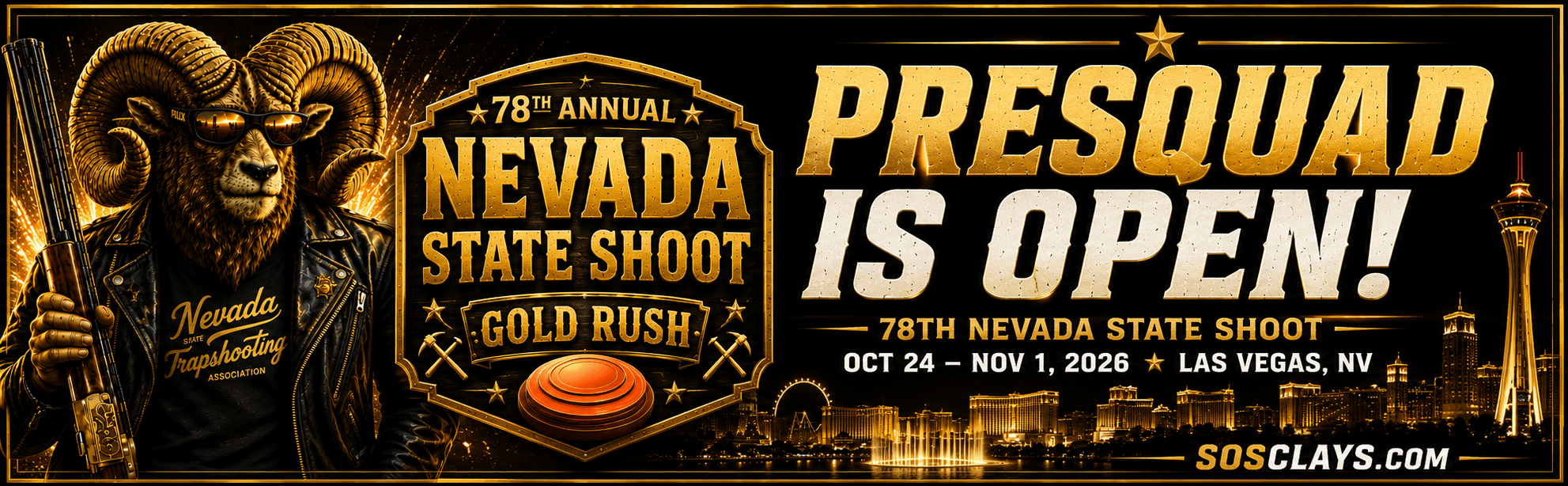
Nevada has a long and proud trap shooting tradition. The Nevada State Shoot is one of the top state championship events in the ATA, and it all started with someone doing exactly what you're about to do.